Archives
- 2026-08
- 2026-07
- 2026-06
- 2026-05
- 2026-04
- 2026-03
- 2026-02
- 2026-01
- 2025-12
- 2025-11
- 2025-10
- 2025-09
- 2025-03
- 2025-02
- 2025-01
- 2024-12
- 2024-11
- 2024-10
- 2024-09
- 2024-08
- 2024-07
- 2024-06
- 2024-05
- 2024-04
- 2024-03
- 2024-02
- 2024-01
- 2023-12
- 2023-11
- 2023-10
- 2023-09
- 2023-08
- 2023-06
- 2023-05
- 2023-04
- 2023-03
- 2023-02
- 2023-01
- 2022-12
- 2022-11
- 2022-10
- 2022-09
- 2022-08
- 2022-07
- 2022-06
- 2022-05
- 2022-04
- 2022-03
- 2022-02
- 2022-01
- 2021-12
- 2021-11
- 2021-10
- 2021-09
- 2021-08
- 2021-07
- 2021-06
- 2021-05
- 2021-04
- 2021-03
- 2021-02
- 2021-01
- 2020-12
- 2020-11
- 2020-10
- 2020-09
- 2020-08
- 2020-07
- 2020-06
- 2020-05
- 2020-04
- 2020-03
- 2020-02
- 2020-01
- 2019-12
- 2019-11
- 2019-10
- 2019-09
- 2019-08
- 2019-07
- 2019-06
- 2019-05
- 2019-04
- 2018-11
- 2018-10
- 2018-07
-
br Discussion In a series of linear mixed
2025-01-20
Discussion In a series of linear mixed effects models of longitudinal neuroanatomical change, we have identified genetic risk variants associated with an increase in Herbal laxative shape asymmetry in AD. The closest genes associated with significant SNPs include BIN1 (rs6733839), CD2AP (rs10948
-
Within the PARP family TIPARP is most evolutionarily conserv
2025-01-20
Within the PARP family, TIPARP is most evolutionarily conserved with PARP12 (ARTD12) and PARP13 (ARTD13) [27,28,41]. All three proteins contain at least one RNA-type CCCH zinc finger domain, a poly-ADP-ribose binding WWE domain and a PARP catalytic domain (Fig. 1). PARP13 is catalytically inactive,
-
To further clarify the vascular cell types expressing AR sub
2025-01-20
To further clarify the vascular cell types expressing AR subtypes, double immunofluorescence staining for ARs and vascular endothelial carbidopa or vascular smooth muscles was performed. As shown in Fig. 3, Fig. 4, overlay images show the expression of all ARs subtypes that we examined in vascular
-
The literature suggests that adiponectin has a steroidogenic
2025-01-20
The literature suggests that adiponectin has a steroidogenic effect on ovarian function. In pigs, in vitro studies have shown that adiponectin reduced basal testosterone secretion in internal theca cells; in granulosa cells, it increased secretion of estradiol and, in combination with insulin, incre
-
The A b action occurs in conditions where
2025-01-20
The A2b action occurs in conditions where high concentrations of adenosine is generated, so its blockage does not interfere with other physiological processes mediated by adenosine and others AR [105]. Furthermore the A3 receptor was shown to have pro-apoptotic effects on tumor lines of breast, lung
-
In vitro studies with soman inhibited non aged AChE
2025-01-18
In vitro studies with soman-inhibited, non-aged AChE revealed a species dependent reactivating potency of HI-6 and MMB-4. With guinea pig AChE second order reactivation rate constants of 0.051 and 0.038mM−1min−1 were determined for HI-6 and MMB-4, respectively (Luo et al., 2007). Corresponding value
-
br Materials and methods br Results
2025-01-18
Materials and methods Results Discussion CUs, which have been used as traditional medicine for thousands of years in East Asian countries, have the potential to be used for cancer chemoprevention and chemotherapy [17], [18], [19], [20]. CuB is one of the most promising agents as it is repor
-
Functional enhancers are often composed of binding motifs of
2025-01-18
Functional enhancers are often composed of binding motifs of multiple key transcription factors to confer spatial and temporal regulation of genes in a certain context. In the uterus, the difference between the number of genes that have associated PGR occupancy and that of progesterone responsive ge
-
Apoptosis a major process of programmed
2025-01-18
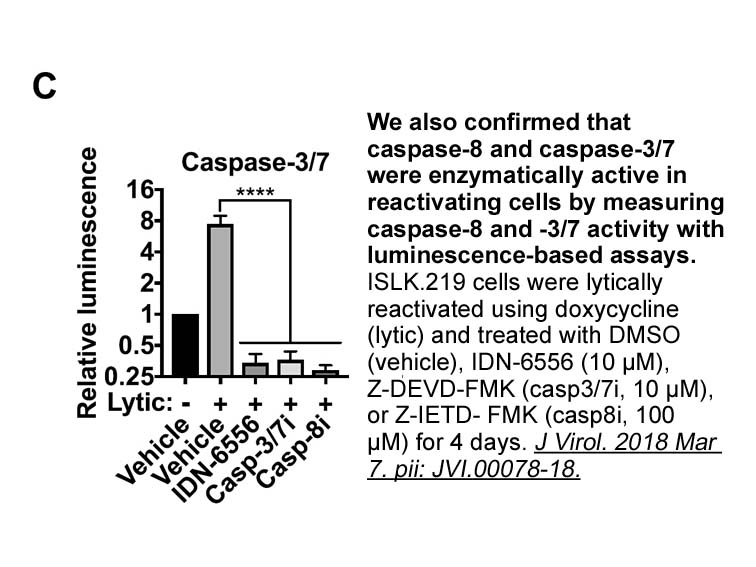
Apoptosis, a major process of programmed cell death, and in response to many chemopreventive agents (Jeyamohan et al., 2016). In general, two major signaling pathways control apoptosis, namely, a pathway mediated by cell death receptor and a pathway mediated by mitochondrion, and possible drug targe
-
ROCK Pathway Blocker br Materials and methods br Results br
2025-01-18
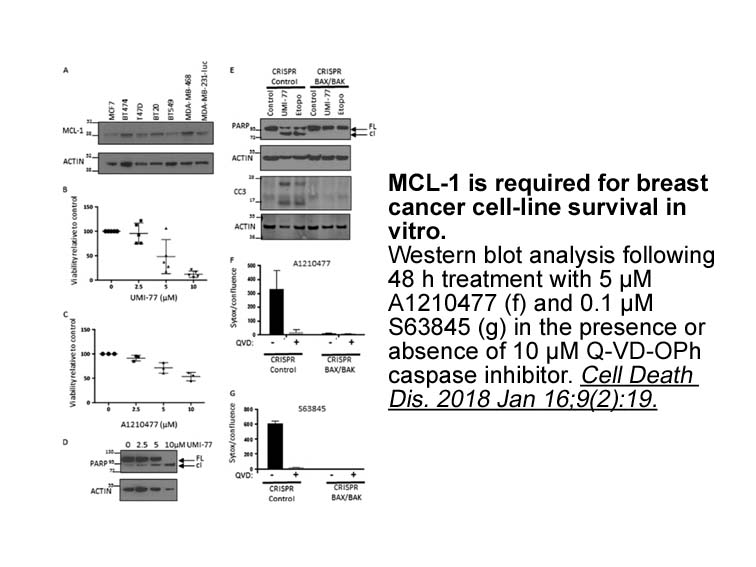
Materials and methods Results Discussion Fluoride can readily penetrate cellular membranes and seriously damage the structure and physiological function of cells (Zhou et al., 2015). Several studies have shown that excessive fluoride can decrease the viability of cells and that the growth o
-
Apelin is involved in various physiological functions includ
2025-01-18
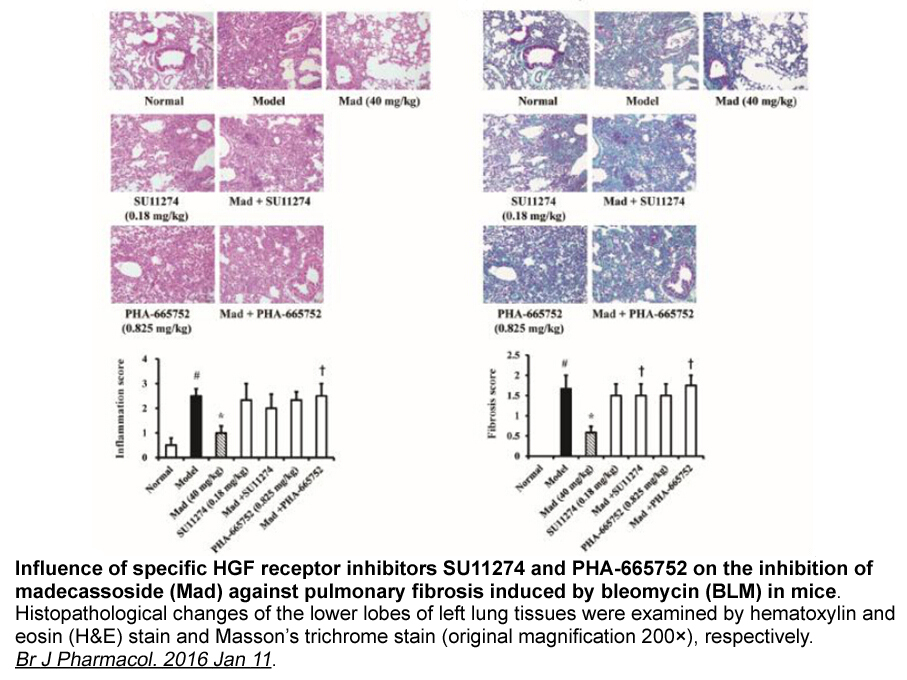
Apelin is involved in various physiological functions, including Calcium release blocker contraction (Ashley et al., 2005), vasodilatation (Jia et al., 2007), feeding control (Valle et al., 2008), and metabolic homeostasis (Higuchi et al., 2007, Dray et al., 2008, Attane et al., 2010). Its plasma le
-
RS 33295-198 As regards LEPR Sun et al showed that the rs
2025-01-18
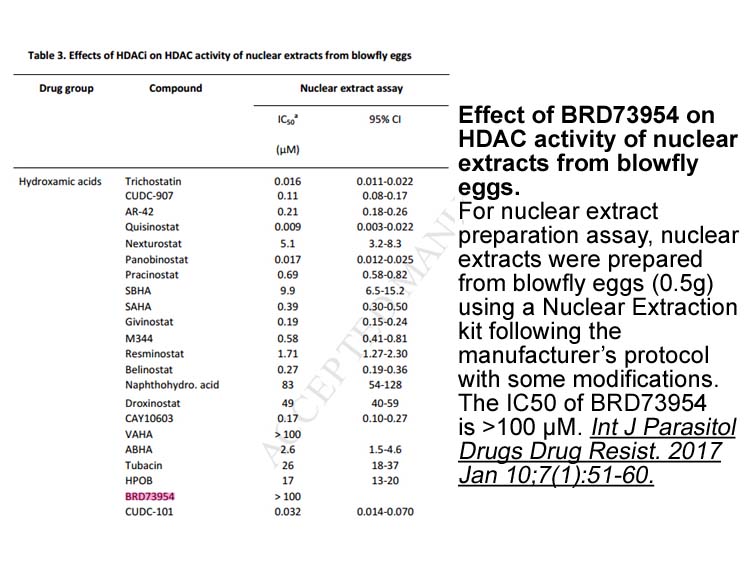
As regards LEPR, Sun et al. showed that the rs1137101-223A > G polymorphism influences the effectiveness of simvastatin on plasma HDL-C levels in CHD patients [35]. In accordance with the results of García-Bermúdez et al., however, no such an association exists between leptin rs2167270 (G > A) polym
-
Apelin is a bioactive peptide and endogenous ligand
2025-01-18

Apelin is a bioactive peptide and endogenous ligand for the APJ receptor (APLNR), a member of the G protein coupled receptor family that shares a similar sequence as the angiotensin type-1 receptor (AT1) [5]. Early studies demonstrated that the apelin/APLNR receptor axis plays a significant role in
-
Azaserine Indications that HMGA proteins are involved in reg
2025-01-18

Indications that HMGA proteins are involved in regulating the structure and function of large chromatin domains come from the early work of Saitoh and Laemmli [143]. Employing immunolocalization techniques, these workers demonstrated that HMGA1 proteins are co-localized with both histone H1 and the
-
What are the in situ
2025-01-18
What are the in-situ effects of multi-site CaM associations with AT1R? Kai et al. showed that synthetic peptides corresponding to residues 125–137 (rat sequence) in SMD2, 217–227 in the N-terminal side of SMD3, and 304–316 in SMD4JM inhibit to various degrees AngII-induced GTPase activity of isolate
16035 records 53/1069 page Previous Next First page 上5页 5152535455 下5页 Last page